We apply scientific innovation and clinical intelligence to advance a new generation of differentiated therapies to better address unmet needs for patients with immunologic and inflammatory diseases.
miragene pipeline
ASSET
TARGET
INDICATION
PRECLINICAL
PHASE 1
PHASE 2
MAG-007
BTK (next-gen BTKi with best-in-class potential)
Chronic spontaneous urticaria Other indications to be disclosed
Two targets to be disclosed (bi-specific mAb with extended half-life)
To be disclosed
PRECLINICAL
PHASE 1
PHASE 2
led by Partners
ASSET
TARGET
INDICATION
PRECLINICAL
PHASE 1
MAG-018*
ILT7 (mAb)
To be disclosed
PRECLINICAL
PHASE 1
MAG-013+
IL7Ra (mAb)
To be disclosed
PRECLINICAL
PHASE 1
*Formed partnership with Aditum Bio to create Celexor Bio +Global rights out-licensed to a company incubated by MPM
MAG-007
A PHASE 2–READY, NON-COVALENT, REVERSIBLE, BRAIN-PENETRANT BTK INHIBITOR WITH BEST-IN-CLASS POTENTIAL
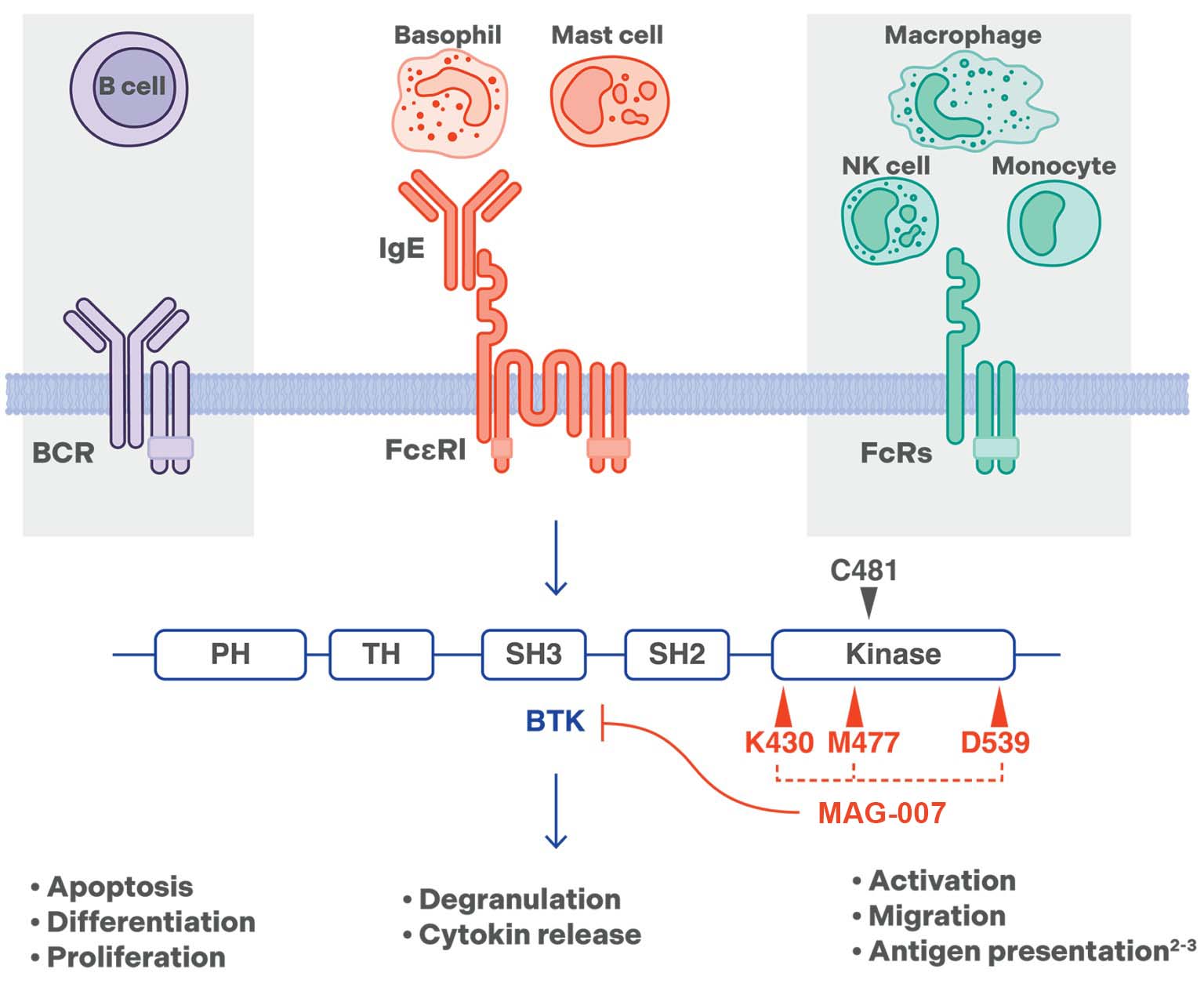
MAG-007 uniquely combines best-in-class potency, the longest reported half-life among BTK inhibitors (31 hours), and a noncovalent, reversible mechanism. This differentiated PK/PD profile supports deep, sustained, and reversible functional BTK inhibition in disease-relevant tissues.
Most covalent, irreversible BTK inhibitors have half-lives of less than seven hours and cannot sustain inhibition of newly synthesized BTK in disease tissues throughout the dosing interval, potentially limiting efficacy. MAG-007 is designed to overcome this limitation while avoiding permanent and cumulative inactivation of platelet BTK, which may reduce bleeding risk. Data generated to date demonstrate exposure-based safety margins of 37–80×.
Supported by Phase 1 clinical data and long-term nonclinical toxicology studies, MAG-007 has the potential to deliver best-in-class efficacy, convenient once-daily dosing, and a favorable safety profile, with minimal risk of bleeding or liver enzyme elevations at anticipated therapeutic exposures. MAG-007 is being developed for chronic spontaneous urticaria (CSU) and peanut allergy.
MAG-017
A pDC depleting anti-BDCA2 mAb
MAG-017, a plasmacytoid dendritic cell (pDC)–depleting anti-BDCA2 monoclonal antibody, has the potential to provide clinical benefit across multiple inflammatory and autoimmune diseases, including lupus. Currently in preclinical development, MAG-017 combines two complementary mechanisms relevant to lupus pathogenesis: BDCA2-mediated inhibition of type I interferon (IFN-I) signaling and direct depletion of pDCs, the major cellular source of IFN-I. In preclinical studies, MAG-017 has demonstrated greater potency in suppressing IFN-I production and in eliminating pDCs compared with leading competitive molecules.
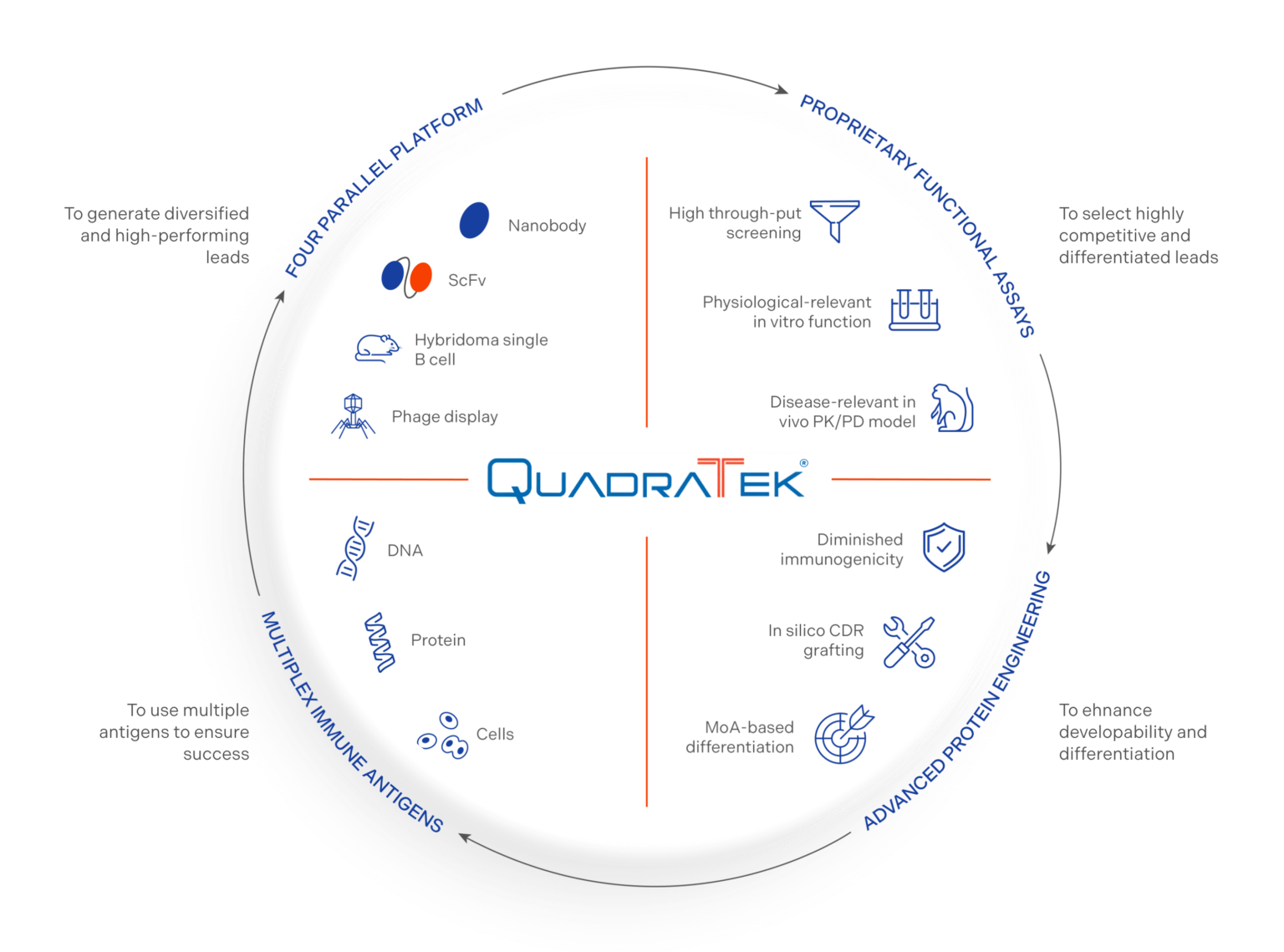
QuadraTek®:
a platform for innovation
Our proprietary QuadraTek® platform is
designed to create highly differentiated biologic
drug candidates with the potential to better address
unmet needs in immunologic and inflammatory
diseases.
Four parallel systems to generate diversified,
high-performing leads
Proprietary functional assays to select
competitive, differentiated drug candidates
Advanced protein engineering to optimize
different aspects of a product